
Verge damage. How motivation informs design.
The verge damage vigilante. Do you recognise this modern day archetype? Nothing gets their blood boiling more than a fresh tyre track across a grassy verge. The earthy soil torn up by the weight of a delivery van is akin to somebody taking a key to the paint of a new car. It is a wound to their very soul!
I have a verge damage vigilante in my life. His eyes light up as he imagines building a fortress around the verge, an impenetrable barrier that would wreak havoc on the wheels of any would-be verge damager!
“What if we plant flowers?”
I could see the gears turning as he tried to figure out if I was serious. Had I really just suggested flowers as a deterrent?
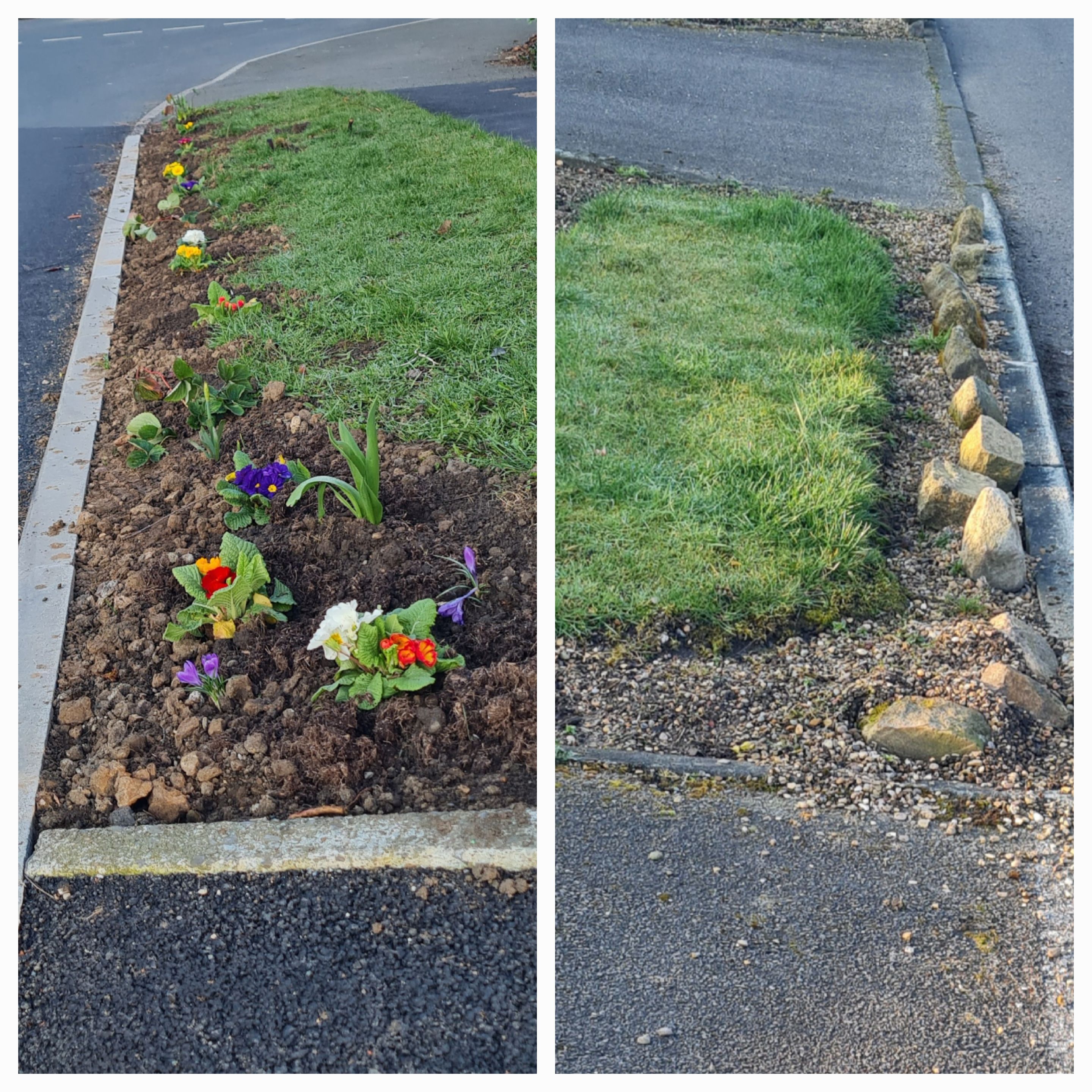
“Imagine a row of blossoms in a riot of colours stretching the length of the verge. Would you drive your car over them?” He paused for a moment, doubt still in his eyes. A quick trip to the garden center and the verge was soon planted up with some spring bulbs.
This isn’t about choosing who was right or which option was better. If we had lined the verge with jagged rocks, we likely would have achieved the same outcome: reduction in verge damage.
So, why flowers?
Reward and motivation are often marked by incentives and punishment. Sometimes, we design systems and environments that anticipate the worst case scenarios. To punish, we would line the verge with jagged rocks as a deterrent.
If we design for the norm, most people do not drive on the verge. Some people do. We might incentivise or reward the behaviour of the many, so we plant the verge with flowers.
Both options present the would-be verge assassin with a choice. To drive on the verge creates an opportunity for loss. If the verge assassin drives on jagged rocks, the loss is likely damage to their car. If the verge assassin drives on the flowers, the loss is the delicate blossoms and buzzing bees. In both scenarios, they are forced to make a conscious choice. They would have to knowingly destroy their car or this little habitat.
Here’s the thing.
Most verge assassins aren’t trying to wreck the verge. They are more likely trying to accommodate traffic by taking up less room on the street. Their motivation isn’t to cause damage but to create space for others. The resulting damage is thoughtless simply because it hasn’t registered as something to think about, not because of malice. Planting rocks or flowers creates a moment of conscious thought which allows them to make a thoughtful choice. If the objective of planting up the verge is to create a moment of conscious, thoughtful choice – flowers will do the trick.
If someone really wants to do something – with malicious intent – they will. Rocks or flowers won’t stop them. Rather than design a concrete jungle of deterrents for the malice driven minority, why don’t we design healthy environments where good choices are constantly rewarded with something beautiful. Design for the many who get it right.
These are lessons I apply when I design work and people experiences.
People will make choices based on what they think is important. We can design systems that remind them of consequences and punishment or we can create environments they want to nurture and care for. As with verge damage, people may not always care about the same things. It’s our job to draw attention and create moments for conscious, thoughtful decision making. The choice is down to the individual – we just help highlight some of the important factors they may not have considered.
Sometimes the thoughtless behaviours we see in our workplace cultures are because people are accommodating something else. Part of my job is to understand the motivations behind behaviours so that we can design opportunities where people can be thoughtful of the impact they have on their surroundings. All we really do is help people see things from a different perspective.
Sometimes, I just want a reason to plant flowers.
If you want to talk about a workplace challenge or just want to share ideas about preventing verge damage – I’d love to hear from you.
 Rebel Edge UK
Leave a comment